

Waking up with a stiff back can make you wonder whether your sleeping position, mattress, or both are working against you. While an adjustable bed can change the angle of your sleep surface, the mattress itself still plays an important role in how your body is supported throughout the night. Finding the right balance between cushioning and support can make a noticeable difference in overall sleep comfort.
For people comparing the best mattress for back pain, it helps to look beyond firmness alone. Body weight, preferred sleeping position, mattress construction, and the way the mattress responds when the bed moves can all influence the experience. An adjustable setup may offer more flexibility, but that flexibility works best when paired with a mattress that can adapt without losing consistent support.
Why Sleeping Position Matters for Back Comfort
Your sleeping position determines where your body places pressure on the mattress. When you lie down, heavier areas such as the hips and shoulders naturally press farther into the sleep surface. If the mattress is too firm, those areas may not receive enough cushioning. If it is too soft, the body may sink excessively, making it harder to maintain a comfortable posture.
Back sleepers generally benefit from a surface that supports the natural curves of the body while preventing the hips from sinking too deeply. The goal is not necessarily to find the hardest mattress available. Instead, balanced support and pressure relief are often more useful considerations.
Side sleepers have different requirements. Because the shoulders and hips bear more pressure in this position, a certain amount of contouring can help create a more comfortable surface. Combination sleepers have another challenge: they frequently move between positions and therefore need a mattress that remains comfortable and supportive during those changes.
SweetNight's guidance similarly emphasizes spinal alignment and pressure-relieving comfort when choosing a mattress for back discomfort, while noting that individual preferences still matter.
How an Adjustable Bed Changes Your Sleep Surface
An adjustable bed allows the head or foot section to be raised instead of keeping the entire mattress completely flat. Depending on the base, sleepers may use different configurations for reading, watching television, relaxing, or sleeping.
That movement changes the relationship between your body and the mattress. When the head or foot section rises, the mattress bends with the base. A suitable mattress therefore needs enough flexibility to follow the movement without becoming awkward or creating uncomfortable pressure points.
This is one reason mattress compatibility matters when shopping for an adjustable setup. Thickness, construction, flexibility, and the mattress's ability to maintain support while changing shape are all worth considering. SweetNight's adjustable-bed guide specifically highlights flexibility, mattress thickness, body weight, and personal preference as factors to consider.
An adjustable base can give you more control over your sleeping environment, but it does not automatically correct an unsuitable mattress. If the mattress does not provide the right combination of cushioning and support for your body, changing the angle of the bed may not solve the underlying comfort issue.
Choosing Firmness Based on Your Sleep Style
Firmness is one of the most discussed factors when selecting a mattress, but there is no single firmness level that suits everyone. A person's body type, preferred sleeping position, and personal comfort preferences all affect how a mattress feels.
For back sleepers, a supportive surface that prevents excessive sinking can help maintain a more neutral-feeling posture. Side sleepers may prefer greater cushioning around pressure-sensitive areas. Combination sleepers often need something in between—supportive enough for back sleeping but responsive and comfortable when turning onto the side.
A medium-firm feel is frequently recommended as a starting point for people concerned about back discomfort, but that does not mean every sleeper will find the same firmness comfortable. The best choice should account for how the mattress actually feels under the individual's body.
An adjustable bed can make this decision even more interesting. Rather than relying entirely on mattress firmness to create a preferred position, sleepers can alter the angle of the base. However, the mattress should still provide appropriate support when the bed is completely flat.
What Makes a Mattress Suitable for an Adjustable Base?
When shopping for an adjustable mattress, flexibility should be one of the first things to consider. A mattress designed to work with an adjustable base needs to bend as the frame changes position. A mattress that is excessively rigid may not move naturally with the base.
Construction also matters. All-foam mattresses are generally flexible, while some hybrid designs combine flexible comfort materials with individually wrapped coils that can move more independently. The important point is to check the manufacturer's compatibility information rather than assuming that every mattress will work equally well on an adjustable base.
Thickness deserves attention too. A very thick mattress may behave differently when bent than a thinner model. Weight is another consideration because the adjustable mechanism needs to move both the base and mattress effectively.
SweetNight's adjustable-bed recommendations currently highlight its Prime Memory Foam Mattress, describing it as suitable for side, back, and combination sleepers and emphasizing its contouring design, high-density foam, and four firmness options.
Comfort Meets Support in the Twilight Hybrid
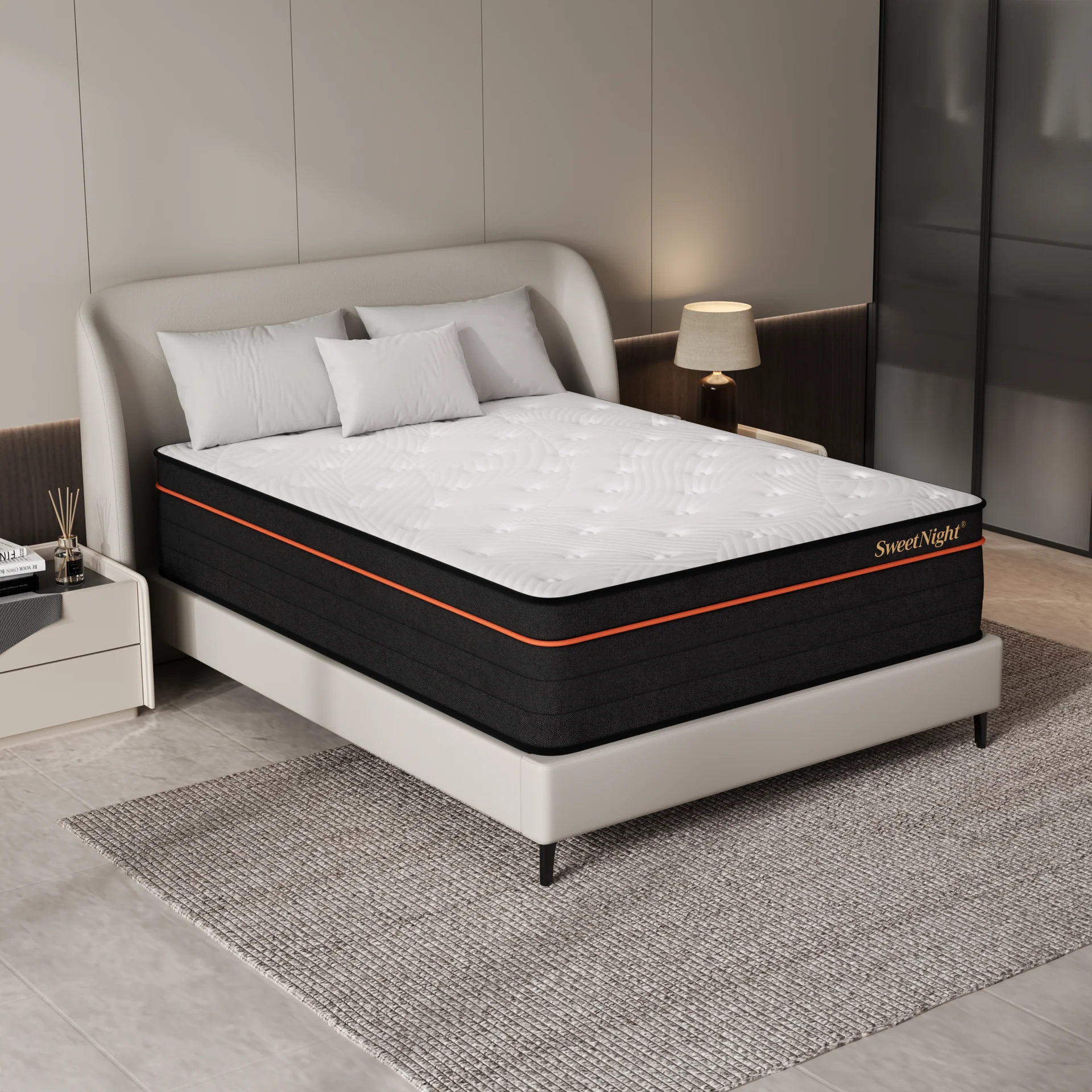
The SweetNight Twilight Hybrid Mattress combines responsive memory foam with individually wrapped coils to create a balance of cushioning and support. Its adaptive comfort foam and BioTouch™ contouring foam conform to the body while helping distribute weight more evenly. Gel-infused memory foam adds pressure-relieving comfort, while the Dynamic Coil™ support layer provides responsive support and helps reduce motion transfer. Reinforced edge coils also improve stability around the mattress perimeter. Available in multiple thicknesses, the Twilight Hybrid offers different comfort levels to suit a range of sleeping preferences.
Why Pressure Relief and Support Need to Work Together
It is easy to think of pressure relief and support as competing features. In practice, a comfortable mattress needs both.
Pressure relief concerns how the sleep surface cushions areas that press against it. Support concerns how effectively the mattress keeps the body from sinking excessively and helps maintain a stable sleeping surface. A mattress can feel wonderfully soft at first but still lack the support a particular sleeper needs. Conversely, a very firm mattress may provide plenty of resistance while creating uncomfortable pressure around the shoulders or hips.
Memory foam is popular partly because it can contour to the body's shape. Hybrid mattresses can offer a combination of foam cushioning and responsive coil support. Neither construction is automatically better for everyone. The more useful question is whether the specific design matches your sleeping position and comfort preferences.
SweetNight's back-pain guide describes its Prime Memory Foam Mattress as an option for side, back, and combination sleepers, with contouring and multiple firmness options intended to accommodate different preferences.
Give Your Body Time to Adjust
Changing mattresses or introducing an adjustable base can feel different at first. Your body has become accustomed to your previous sleep surface, so a new mattress may require an adjustment period.
Instead of judging the mattress after one night, pay attention to how it feels over a longer period. Notice whether you are comfortable when falling asleep, whether you can change positions easily, and how your body feels when you get up in the morning.
SweetNight currently offers a 100-night mattress trial, giving customers an extended period to experience a mattress at home rather than relying solely on a brief showroom test.
Finding the Right Combination
An adjustable bed can be a useful tool for customizing your sleep position, but the base and mattress should work as a team. Start by identifying your most common sleeping position, then consider the amount of cushioning and support you prefer. From there, check whether the mattress is compatible with your adjustable base and whether its construction can flex comfortably as the frame moves.
For people who change positions frequently, flexibility and responsiveness may be particularly important. Side sleepers may want more contouring around the shoulders and hips, while back sleepers may place greater emphasis on stable support. Couples may also need to consider motion isolation and whether both partners have similar comfort preferences.
Ultimately, there is no universal mattress that guarantees perfect sleep for every person. The right choice is the one that complements your body, sleeping position, adjustable base, and personal comfort needs. By considering those factors together rather than focusing on a single feature, you can create a sleep setup that feels more supportive and comfortable night after night.